
New high-confidence reports suggest Apple will enter the foldable phone market, as early as next year, according to J.P. Morgan and for a price of $1,999.
For years, the prospect of a foldable iPhone has been a subject of tech speculation. Now, both J.P. Morgan and a new Bloomberg report reveal that Apple could unveil a new clamshell phone, similar to the Samsung Galaxy Z Fold (featured below), as soon as 2026. The report details a roadmap that prioritizes user experience, mainstream adoption, and long-term innovation over a rushed market entry. This explains why Apple has waited on the sidelines as Samsung has dominated with its devices.
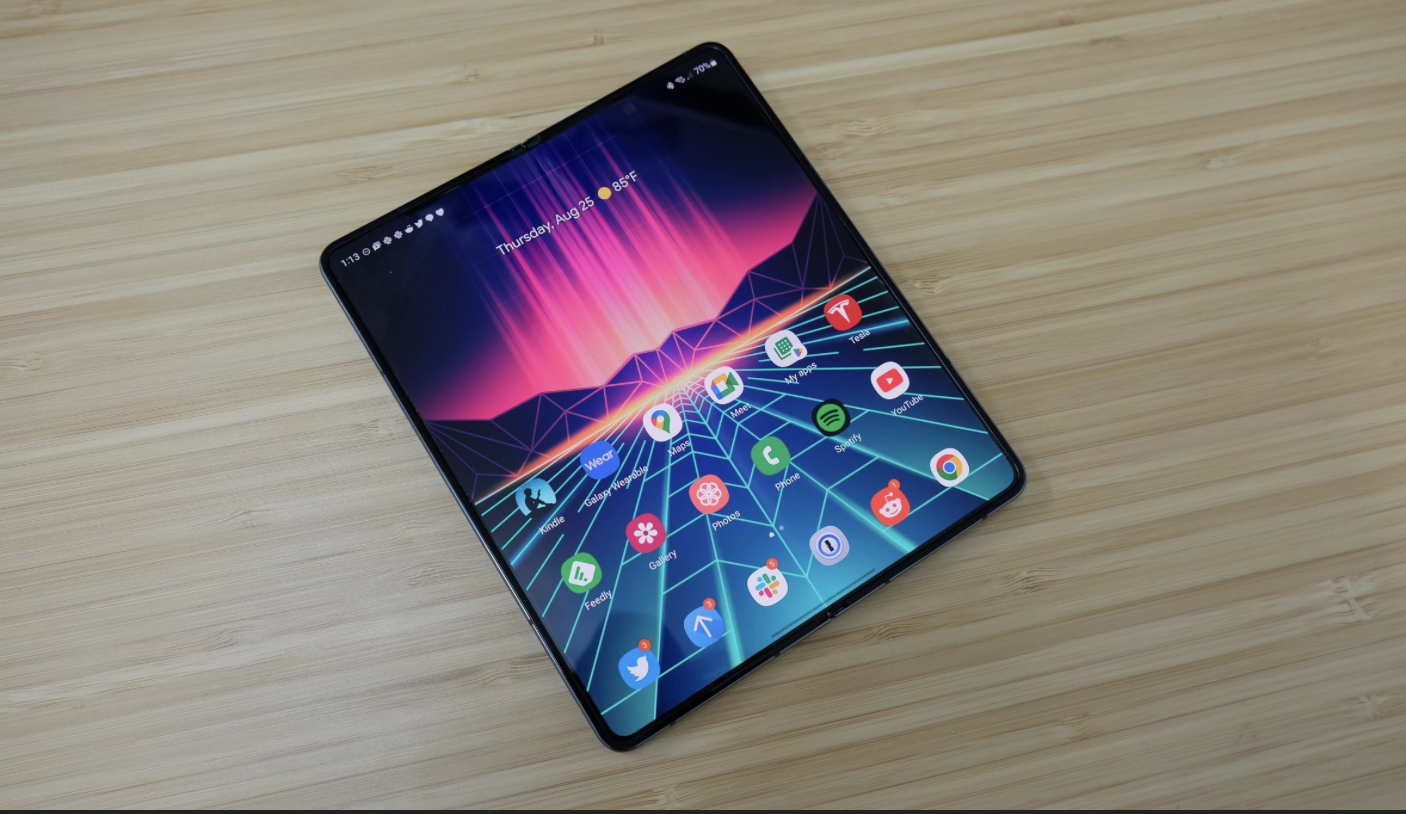
Here’s what we know about the foldable iPhone, reportedly to be released as part of the iPhone 18 lineup, from various sources:
- “Noticeably Thinner” than Samsung’s Z Flip. Looking to making a statement even as a late comer to the market, Apple will likely focus on elegance and feel. No one wants a brick in their pocket, and Apple knows it.
- Has A Large Cover Display. Apple wants to fix one of the biggest complaints of early flip phones – the display. Bloomberg says to expect a large, fully functional display on the outside, so you can use the device without even opening it.
- No “Pro” Model (At First). Reports also suggest that there won’t be a “Pro” release initially. Watchers say that the product is aimed at the mainstream consumer – not as a niche or experimental product at a premium price.
Engineering A Crease-Free Experience
Apple’s long development timeline appears directly linked to its ambition to solve the issues plaguing the foldable market. It is aiming to design a nearly invisible display crease and a highly durable hinge that keeps the phone from snapping in half.
Focusing on a solid user experience is what Apple does best. And as CNET notes, this obsession “is being field-tested in plain sight with the rumored “iPhone 17 Air.” They’re perfecting the materials and manufacturing on a normal phone before they risk it on a foldable.”
CNET theorizes that Apple may be using its rumored ultra-thin “iPhone 17 Air” as a testbed for a durable foldable device. This would allow the company to refine its techniques on a traditional form factor before applying them to the more complex foldable architecture.
A 2026 release feels a long way off, but if Apple delivers on these promises, it could revive and take over from Samsung in the foldable space, opening up new product channels.
What do you think? Is a thinner, mainstream flip phone the right move for Apple?